A process that eventually returns a system to its initial state is called a cyclical process. Therefore, the net work done during the process must be exactly equal to the net amount of energy transferred as heat.
es: Flujo de calor cíclico
Film Coefficient
Conjunction
The film coefficient, convection coefficient, or surface transmission coefficient, commonly represented as h, quantifies the influence of fluid, surface, and flow properties when convective heat transfer occurs.
es: Coeficiente de Pelicula
Fixed Support
noun
A fixed support is the most rigid type of support or connection. It restricts the member in all translations and rotations. (ie it cannot move or rotate in any direction).
es: Soporte fijo
Heat Sinks
Conjunction
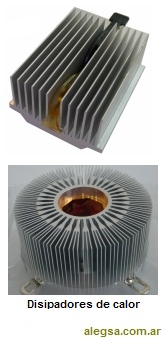
A heatsink is an instrument used to lower the temperature of some electronic components. Its operation is based on the zero law of thermodynamics, transferring the heat from the hot part that you want to dissipate into the air.
es: Disipadores de calor
Isotropic Instantaneos Coefficient
Conjunction
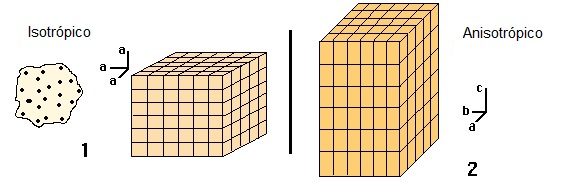
A material is considered isotropic if its properties do not vary with direction. Isotropic materials, therefore, have an elastic modulus, a Poisson's ratio, a thermal conductivity, a coefficient of thermal expansion, etc. identical in all directions. The term isothermal is sometimes used to indicate materials without preferred directions for coefficients of thermal expansion.
es: Coeficiente instantáneo isotrópico
Transient Thermal
Noun
The ability to transmit heat is called thermal conductance and its reciprocal is called thermal resistance (Rth) which has a unit of ° C / W (degree Centigrade / Watt).